
A document, not an activity
Most people searching for a competitor study template have a deadline. A CEO, a board or an investor wants a document by Friday, and the blank page is the problem.
The activity behind it, collecting and comparing, is covered in how to do a competitive analysis, step by step and how to research your competitors in four steps. This note is about the thing you hand over at the end.
A competitor study is read by someone who has to decide something, and it has to stand on its own three months later. Both facts shape every section below. The example throughout is Loop Earplugs, measured from the outside on public sources, with every number dated.
What a competitor study is
A competitor study is a written document that describes a small set of named rivals, compares them with you on the same measures, and ends in decisions. It records where each fact came from and when, so a reader can trust it or check it.
Three terms get mixed up. Competitive analysis is the process: the collecting, reading and comparing. Market research is about the market: its size, its buyers, its trends. The competitor study is the output of the analysis, and it is about rivals, not the market. If your document spends five pages on market size and one on the company taking your customers, it is market research with a different cover.
When you need one
Not every quarter. A competitor study earns its cost when a decision is coming that a rival could change:
- a launch, where you need to know what the buyer will compare you with on day one;
- a price change, yours or theirs;
- a new market, where the rival you know may not be the one that matters;
- an investor round, where someone will ask who else does this;
- and when sales loses to the same competitor for the third time.
The 7 sections of a competitor study
Seven sections, in this order. Most teams write sections two, four and six and skip the rest. The skipped ones are what make the document usable.
1. The question it answers
One sentence at the top. "Should we launch a cheaper tier before the autumn?" "Why do we lose to Loop on sleep earplugs?" "Is there room for us in Germany?"
Without the question, a study turns into a catalogue: everything you found, in the order you found it. With it, you can cut most of what you collected, which is the point. If you cannot write the question, you are not ready to write the study.
2. The set, and why each one is in it
Name the competitors and give each one a line on why it is there. Four kinds are worth considering. Direct rivals sell the same thing to the same buyer. Indirect rivals solve the same problem another way. Substitutes are what the buyer does instead, which in many B2B categories is a spreadsheet. New entrants are small today and growing faster than the category.
Three or four names is enough. A study of twelve companies produces averages, and nobody is losing deals to an average.
3. Method and sources, with dates
Say what was measured and what was modelled, which sources were free and which were paid, and on which day each number was read. A traffic figure from Similarweb is an estimate. A price on their product page is a fact on the day you read it.
Those are different kinds of claim and the reader should be able to tell them apart. We explain why we give estimates as ranges in why we publish a band, not a number.
4. One profile per competitor
One page per rival, not five. The same fields every time, so profiles can be read side by side:
- offer: what they sell and how the range is built;
- price: the ladder, the median, the spread, and how often it moves;
- customer: who buys, and what they complain about;
- channels: where the traffic comes from;
- message: what they claim, in their own words;
- team: what they are hiring for;
- traction: the signs that something is working.
If a field is empty because you could not measure it, say so.
5. The side-by-side benchmark
The rules are simple and routinely broken: the same measures for both sides, read in the same week, collected the same way. If you count your own reviews from your database and theirs from a public widget, the benchmark measures your collection, not the two companies.
Mark which differences are real. A rating that moved by 0.04 is noise. A measure only counts as moved when the change is bigger than its own usual swing. The mechanics are in how to benchmark your brand against a competitor.
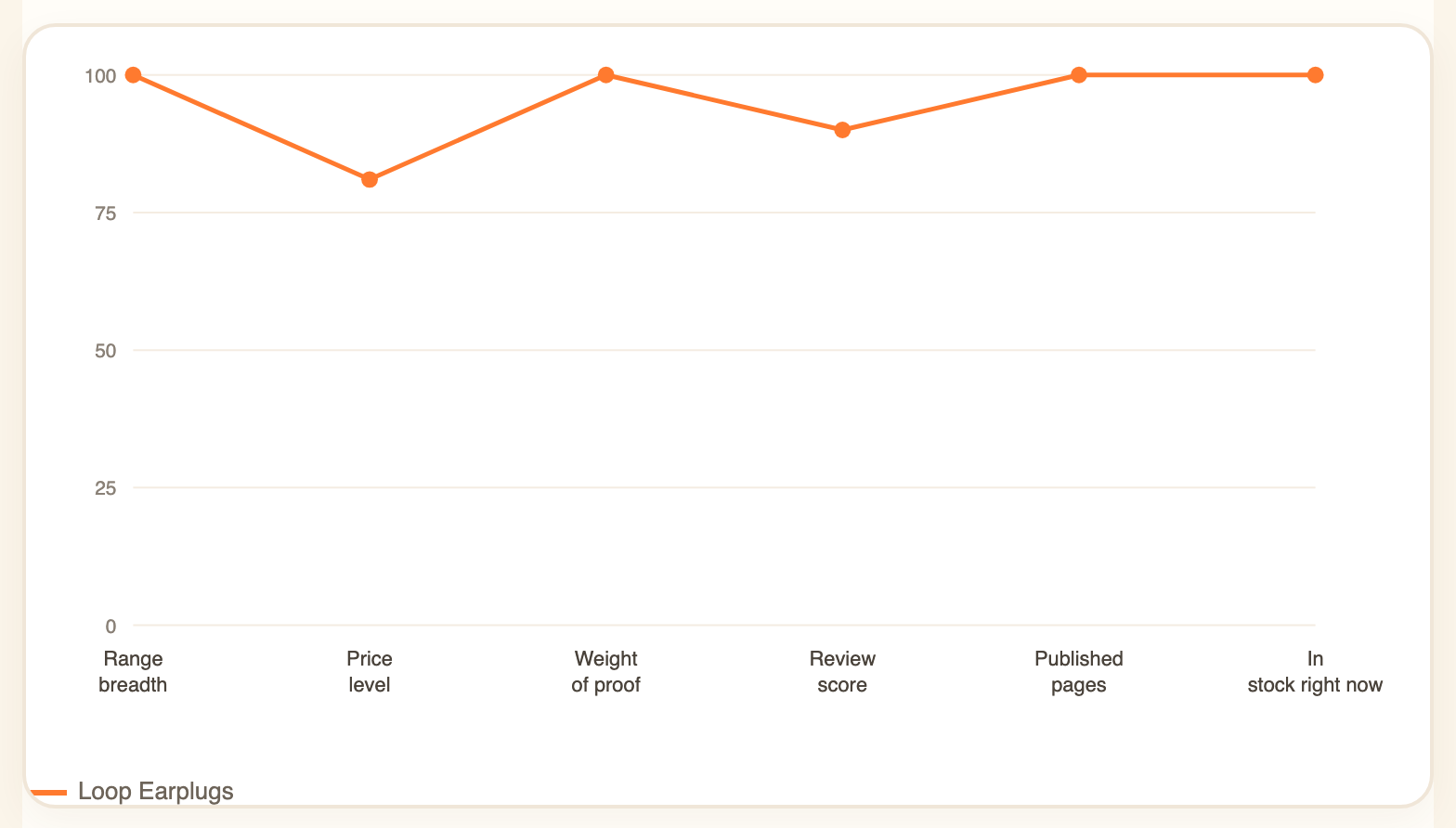
6. The frameworks that earn their place
Be honest about frameworks. A SWOT is a starting point, not a finding. Porter's five forces and the BCG matrix are models of an industry or a portfolio, and they say little about one rival.
Three tend to earn their page in a competitor study. A perceptual map shows where their products sit on the two things buyers compare. A strategy canvas shows where they invest and where they do not. A battlecard is the one page sales will actually open. We filled in eleven of them with real data in 11 frameworks filled with real competitor data.
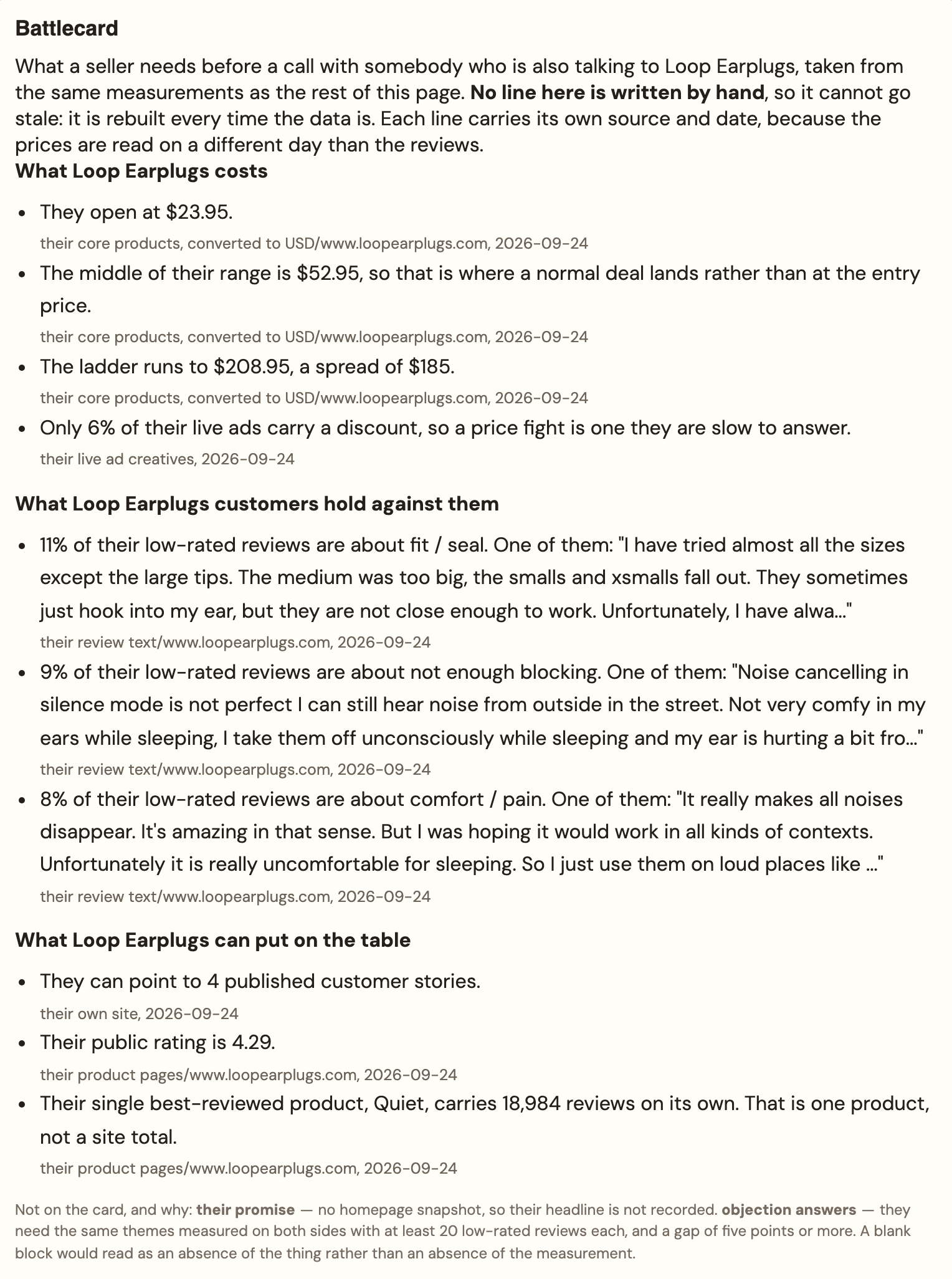
7. Findings, three decisions, and what would change your mind
The section everybody skips. Go back to the question in section one and answer it. Then write three decisions, each with an owner and a date. Not twenty. Three.
Finish with what would change your mind: the measure that, if it moved, would make you reverse one of the decisions. That line is what turns a study from a verdict into something you can check.
A worked example: Loop Earplugs, studied from the outside
Here are the seven sections filled in briefly for Loop Earplugs. Numbers were read on 28 September 2026 unless another date is given, and all of them sit on Loop's benchmark.
- Question. Where can a smaller earplug brand win buyers that Loop currently reaches first?
- Set. Loop alone in this example. A real study adds two or three names, each with its line.
- Method. Public sources only. Traffic is a Similarweb estimate for August 2026. Ads come from the Meta ad library, last collected 6 September 2026. Complaints come from 2,500 reviews read on 24 September.
- Profile. Offer: 66 products. Price: median $52.95 for core products, spread $185, return window 100 days. Customer: store rating 4.35, Trustpilot 3.6 on 8,133 reviews, but only 2.58 on the newest. Channels: about 4.4 million visits in August (modelled by Similarweb), down 2.2% on July; search 49.4%, direct 18.0%, social 13.2%, display 9.0%, email 6.3%. Team: 19 open roles, 37% sales and marketing, 21% engineering. Traction: 841,971 Instagram followers, 281,600 on TikTok, 63 press articles, 17 in major outlets.
- Benchmark. Loop appears in 79% of AI answers across 18 questions and five engines; where it appears, it is named first 69% of the time and framed positively 37% of the time.
- Frameworks. Battlecard, perceptual map, strategy canvas. No SWOT.
- Findings. Below.
Three findings stand out. First, prices move in batches: 38 products dropped in price between the snapshots of 15 and 24 September, and 18 of them by exactly $1.00. That is one decision landing on 18 products, not 18 decisions. The biggest cuts were $4.00, on the Travel Bundle and The All-In Bundle.
Second, the discount has left the ads. They ran 6,989 live ads in Meta's library on 24 September. In the 50 ads read in detail on 6 September, only 6% carried a discount, and 29 were catalogue ads rotating store products. The discount now lives in the popup and the inbox: 22 emails since 18 August, about four a week, as traced in the competitor customer journey.
Third, the biggest complaint themes are about the product. Of 282 reviews at three stars or below, the biggest themes were fit and seal (30), not enough blocking (25) and comfort and pain (23). The full reading is in voice of customer analysis.
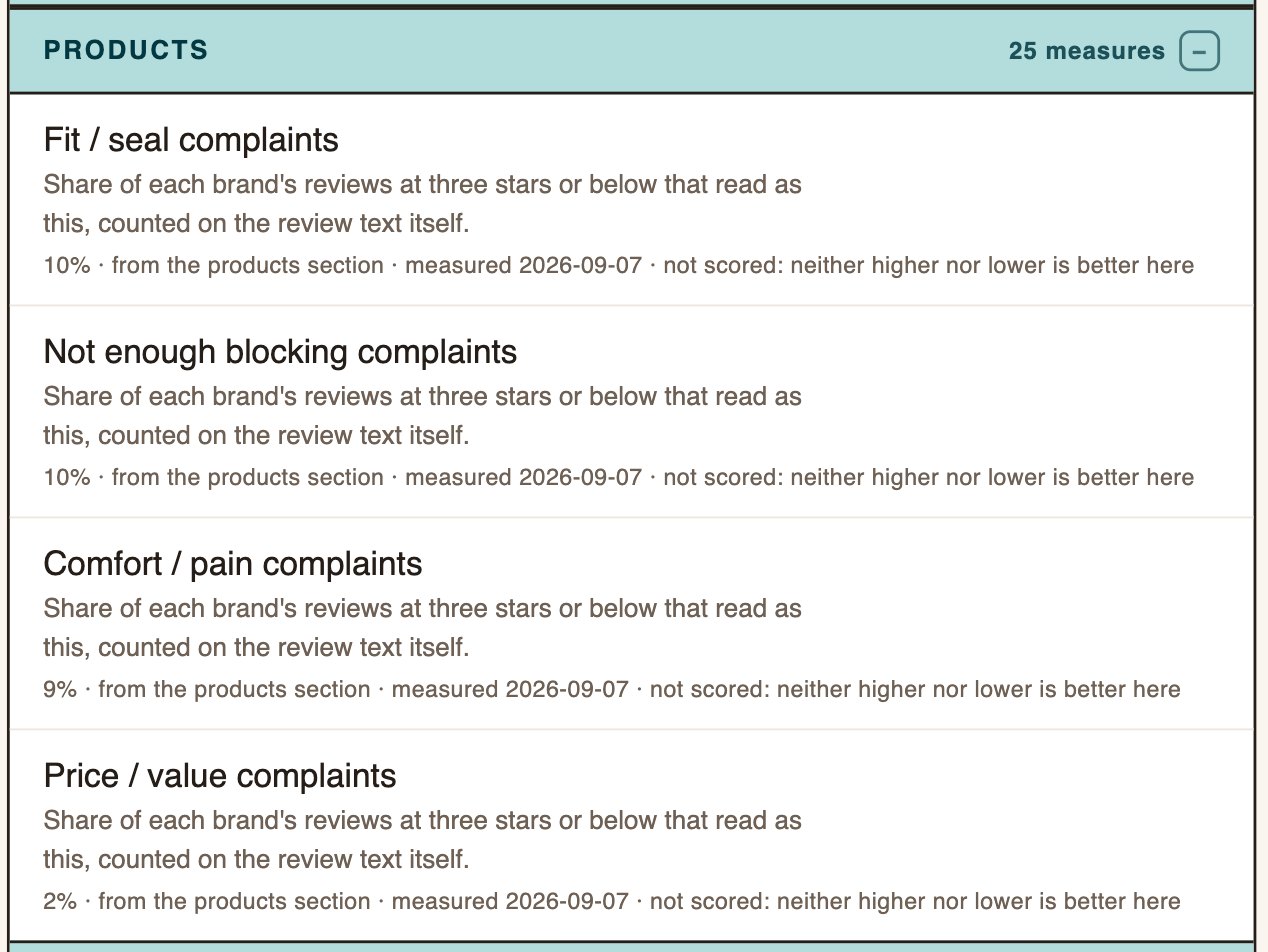
Three decisions follow for a smaller rival: compete on fit and comfort in the product pages, match the email cadence before matching the discount, and treat Loop's $1 batch as one move, not a price war. What would change our mind: a price move larger than a dollar across many products, or the gap between Loop's Trustpilot average and its newest reviews closing.
What we could not measure: revenue, conversion, email list size, ad spend and the terms of any creator deals. The study says so rather than guessing.
What does not belong in a competitor study
Leave out anything obtained by pretending: no fake customer enquiries to their sales team, no posing as a job candidate to get a demo, no accounts opened under a false name. Leave out leaked documents, even when someone forwards them helpfully. And leave out anything a former employee of theirs should not be telling you.
The less dramatic rule matters just as much. Do not present a guess as a fact. An estimate is fine with a label. A number that jumped overnight needs checking before it goes in: Loop's backlinks and referring domains both jumped on 24 September, mostly on nofollow links, and we cannot yet tell a recount at the data provider from real new links.
So it stays out of the findings. Everything in the example above was public. As we argue in do you need a tool if it is all public anyway?, public is enough.
How to keep it from going stale
A competitor study has a shelf life. Prices move, ads rotate, roles open and close. Loop opened 13 roles and closed 18 in 18 days. A study that quotes the old count still sounds right, which is the problem.
Date every number, and read again the measures that move. Then be careful about what counts as movement. Our own pages taught us this: a sample of five ads that is five different ads on every fetch looks like change but is a sample, and a value written again without being fetched again looks like "unchanged". Both can make a study look busier than the market is.
Teams tend to move through three stages: an ad hoc study when a decision forces it, a systematic one with the same sections every time, and finally a running one where the numbers update themselves and the document is the part people write.
FAQ
How long should a competitor study be? As long as the question needs. One page per rival, one benchmark table, one page of findings. For three competitors that is usually under ten pages.
How many competitors should it cover? Three or four. More than that and the benchmark turns into averages.
Who should own it? Whoever owns the decision in section one. If nobody owns the decision, the study will not be read.
Is a SWOT the same as a competitors study? No. A SWOT is about you, with rivals as one of four boxes. It can sit inside section six, but it cannot replace the rest.
Copy-ready competitor study template
The seven headings, with one prompt each.
- The question it answers. One sentence: which decision does this study serve?
- The set. Three or four names, each with one line on why it is in.
- Method and sources. What was measured, what was modelled, which sources, which dates.
- Profiles. One page per rival: offer, price, customer, channels, message, team, traction.
- Benchmark. Same measures, same week, both sides, with real moves marked.
- Frameworks. Only those that answer the question: perceptual map, strategy canvas, battlecard.
- Findings and decisions. The answer, three decisions with owners and dates, and what would change your mind.
Pick one competitor. See what we find.
Your first benchmark is free. One domain, measured against you, no card and no call.